Treasure Tales Sorted by Publication Date
Treasure Tales Sorted by Publication Date
Are you looking for the latest published Treasure Tales, articles, and videos to explore? This page lists them with the most recently published at the top.
Note: “v” indicates the Treasure Tale includes video.
THREE RIVERS HISTORICAL MUSEUM

Three Rivers Historical Museum and Visitor’s Center opened in October, 2000, and has been growing ever since, fulfilling its educational and research mission “to preserve the past for future generations” by collecting, preserving, and exhibiting materials relating to our region, and by providing lectures, demonstrations, special events, and participatory programs inviting scholars, residents and visitors to understand and experience our history. Inside are terrific displays, the unique Mineral King Room, and a thoughtful gift shop. Outside: historic structures, vintage vehicles, the 1600′ Heritage Trail, recreated Native American habitations, and Paul Bunyan.
SOUTH SIERRA WILDERNESS

The wonderfully diverse, readily accessible, family friendly (especially the west side) South Sierra Wilderness includes miles of trails and waterways (highlights: the Pacific Crest National Scenic Trail and the Wild and Scenic South Fork of the Kern River), along with plentiful wildlife, California’s State Fish (the gleaming Golden Trout), long meadows flanked by rolling hills, rocky ridges, and many mountains to climb (elevations run from 6100′ at Kennedy Meadows to 12,000+’ atop Olancha Peak), and forests ranging from pinyon-juniper woodlands to Jeffrey, lodgepole , and red fir higher up. Don’t miss this inviting Wilderness.
SACATAR TRAIL WILDERNESS

Sacatar Trail Wilderness, truly wild, straddles the Southern Sierra crest in southeastern Tulare County. Protecting highly diverse, almost trackless, pristine landscapes virtually unaltered by human presence, Sacatar invites visitors to experience public lands in their most natural state. Elevations from 3,500′ to 8,800′ host plant life from cactus and desert shrubs through pinyon-juniper woodland to ponderosas and red fir stands with related wildlife. Hikers, backpackers, and peakbaggers who value solitude, discovery, and a sense of the unknown, and are experienced, self-reliant, and well-prepared, will relish time spent in this intriguing, wide-ranging wilderness.
TULE RIVER INDIAN RESERVATION

The original Tule River Indian Reservation in Tulare County was established in 1856 on prime farmland in what is now east Porterville. After California’s Gold Rush began in 1848, thousands of discouraged prospectors began settling instead in the Central Valley to farm its rich soil. Their rapidly increasing population and conversion of the natural landscape caused increasing conflict with the Yokuts-speaking people who had thrived here for thousands of years and were being rapidly dispossessed of their land and livelihood. In 1856, hundreds of the Yokuts were forced onto this “permanent homeland” reservation.
TULARE ASSEMBLY CENTER

The Tulare Assembly Center at the Tulare County Fairgrounds (one of 16 Temporary Detention Camps for Japanese Americans) incarcerated almost 5,000 people in April-September, 1942. Most were then transferred to the hastily built Gila River concentration camp in Arizona and imprisoned there until autumn, 1945. (It was Executive Order 9066, issued in February, 1942, after Japan bombed Pearl Harbor, that a month later stripped of their rights about 120,000 persons of Japanese ancestry — 2/3 of whom were U.S. citizens — on the U. S. West Coast, followed by their forced imprisonment beginning in April.)
ST. JOHN’S RIVER TRAIL

St. John’s River Trail is a scenic City of Visalia treasure, inviting you to travel up to 4.4 level miles along its namesake river on a paved path suitable for people of all ages and abilities (and dogs, allowed on leash) to walk, hike, run, or wheel along while enjoying the views, reading the interpretive signs, admiring the areas where native trees and smaller plants have been restored, birdwatching, taking a break on a trailside bench, or visiting some of the adjacent parks via their short connecting trails. Early morning and sunset hours are most photogenic.
TULE RIVER STAGE STATION

The Tule River Stage Station serving the Butterfield Overland Mail stage route through Tulare County in 1858-1861 was housed on this site (which had been a riverside stopover on the old emigrant trail since 1854). In 1860, Royal Porter Putnam was the station’s keeper. In 1862, a huge flood moved the Tule River’s course south a mile. Convinced that the river would stay in its new course, Putnam bought 40 acres of land around the station’s site, got the parcel surveyed, and laid out the plat of a new town, still called Porterville today
WOODVILLE PARK
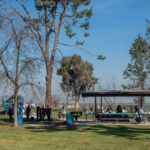
Woodville Park provides the small town of Woodlake with a free, fenced, 10-acre gathering space for residents and visitors of all ages and abilities, offering shaded playground equipment, an arbor, 5 picnic tables with BBQ grills, a soccer field, a 9-hole disc golf course, a baseball diamond with backstop, a basketball court, horseshoe pits, paved pathways, open green spaces, and a restroom. Volunteers tend and add to the grounds (new plants, flagpole, baseball field), and put on events (movie nights, resource fairs, holiday celebrations) keeping the park alive and lively.
SUCCESS LAKE

Success Lake, in the scenic Sierra Nevada foothills just 8 miles east of Porterville, formed in 1961 after its huge earth-filled dam was completed by the U.S. Army Corps of Engineers to provide flood risk and water supply management, wildlife habitat, and extensive recreation opportunities including biking, birdwatching, boating, camping, learning at campfire programs and Ranger talks, fishing, hiking, hunting, photography, picnicking, stargazing, swimming, and wildflower and wildlife viewing. Open year-round, the 2,450-acre reservoir and its neighboring 1500-acre wildlife refuge promise visitors of all ages and abilities a great day out in nature.
SQUATTERS CABIN
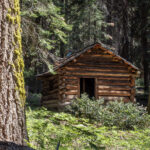
The Squatters Cabin, one of Sequoia National Park’s oldest remaining buildings, is also one of only two known remaining structures of the historic Kaweah Colony (along with the Colony Mill Road, now a hiking trail). The fascinating stories of this ill-fated idealistic, socialistic colony and the founding of our nation’s second great national park are deeply intertwined, centering issues, trends, philosophies, and controversies that are still very much alive today.
NATIONAL PARKS TRAIL CREWS

Sequoia and Kings Canyon national parks’ trail crews are responsible for creating and maintaining over a thousand miles of trails, working long and arduous days in every kind of weather, often in remote backcountry, at elevations ranging from 2,000 to 14,495 feet. Find out who they are, what they do, and what it takes to get on a trail crew. This job “guarantees an unforgettable experience.”
BACKCOUNTRY WILDERNESS RANGERS
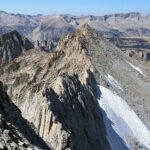
Hear in the Backcountry Wilderness Rangers’ own voices why their job is “a very coveted park position and the one in Sequoia [and Kings Canyon national parks] has got to be one of the best in the nation”; the job is strenuous, challenging, sometimes dangerous, and endlessly rewarding (they get paid in sunsets).
SEQUOIA-KINGS CANYON WILDERNESS
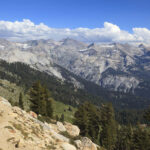
The glorious Sequoia-Kings Canyon Wilderness is huge (over 800,000 acres) and dramatically diverse, with elevations ranging from under 2,000′ to 14,505′ atop Mt. Whitney, threaded by over 800 miles of challenging trails traveling from foothill oak woodlands through varied coniferous forest belts over high passes and along rushing creeks and rivers, through flower-bright meadows, past hundreds of lakes and tarns, into the alpine zone and up to the top of the tallest mountain in the 48 contiguous U.S. states. The scenery is spectacular, the night skies sublime, wildlife abounds, the experience is life-changing, indelible.
PORTERVILLE HISTORICAL MUSEUM

Porterville Historical Museum opened in 1965, in the classic Mission style Southern Pacific Railroad Depot that served the railroad from 1913 until the late 1950s. The museum has changed the historic structure as little as possible while installing a wonderful variety of exhibits, indoors and out, including Native American crafting, Porterville’s Pioneers, farm and fire equipment, Native Wildlife, a Salute to Veterans,and much more, along with special events such as lectures and appraisals, a big annual holiday toy and model train show, ghost hunting tours, and fundraising parties. Porterville’s history is kept alive and growing here.
PIXLEY VERNAL POOLS PRESERVE

Pixley Vernal Pools Preserve, the only designated National Natural Landmark in Tulare County, is only about four miles from Pixley. Vernal pools were once common in much of our county. They form in shallow depressions in impermeable (hardpan) clay soils after sufficient winter rains. Now vernal pools are rare here because farming deep-rips the hardpan, draining the water away from the surface. Preserved hardpan depressions like Pixley’s hold the water that yields colorful “fairy rings” of spring flowers at the pools’ margins, and the fascinating tiny fairy shrimp, self-burying spadefoots, and other creatures that thrive within them. Burrowing owls, ground squirrels, and raptors thrive here, too.
PACIFIC CREST TRAIL

The Pacific Crest Trail travels about 125 miles within Tulare County, from mile-high high-desert expanses in the south to the trail’s highest point, atop Forester Pass (13,200′), in the High Sierra — living up to its National Scenic Trail designation all the way. With a shuttle set-up, you can hike Tulare County top to bottom (or vice-versa) on the PCT, or you can explore the PCT’s glorious TC landscapes in several shorter segments. If you can’t hike the whole 2,600-mile PCT, you can experience much of the awesome best of it right here in Tulare County.
OWENS PEAK WILDERNESS

Owens Peak, at 8,445′, the highest in the southern Sierra Nevada, rises in the center of its rugged 73,767-acre namesake wilderness. Here, the Great Basin, Mojave Desert, and Sierra Nevada ecoregions converge, providing a great diversity of plant life — from desert creosote, yucca, and cacti to numerous forested peaks — as well as two distinct climate zones, plenty of wildlife, vast views, and very starry night skies. Big canyons host springs, oaks, and cottonwoods. Trails include a stretch of the PCT and many use trails, such as peakbaggers’. Hot summers, good shoulder seasons.
KINGS RIVER PARK

Tulare County’s eighty-six acre Kings River Park is our only park that borders the Kings River and that allows hunting (for doves only, Parks tickets required). It also has a challenging 18-hole disc golf course, an arbor, a restroom, and grass-mowing cattle, but no maintained trails. River access is difficult, but there’s fishing (license required). The County’s 1971 proposed Master Plan for this park included a campground; children’s play areas; picnic tables; arbors, fire, horseshoe, and BBQ pits; a boat ramp; and a caretaker’s residence. Meanwhile, the gate’s locked. Contact County Parks for passes.
HOSPITAL ROCK, SEQUOIA NATIONAL PARK

Hospital Rock is an excellent stop along Sequoia National Park’s Generals Highway. “Pah-Din” provides panoramic foothill, mountain, and river views; short trails leading to Native American pictographs, bedrock mortars, and cupules; the huge Rock’s “hospital”; a captivating beach and seasonal waterfall beside the rushing Kaweah River; informative interpretive panels; bird and wildlife watching; and picnic facilities, restrooms, and drinking water. For many hundreds of years, Yokuts, Mono, and Tubatulabal people met, gathered, and lived in the large village on this site. Savor, learn from, and remember this beautiful “place to go through.”
JOHN KREBS WILDERNESS

Sequoia National Park’s 39,740 acre John Krebs Wilderness abounds with spectacular scenery, high peaks and passes, sparkling lakes and rushing streams, forests of aspen and conifers, giant sequoia groves, glorious skies both night and day, wonderfully diverse wildlife and wildflowers, challenging trails, and a roller-coaster history including the U.S. Cavalry, vagrant sheep, silver mines, cabin owners, a game refuge, recreationists, lumber and power companies, Walt Disney, environmentalists, a landmark Supreme Court case, and an arduous journey to becoming part of Sequoia National Park and a designated Wilderness. Two campgrounds and pie are nearby!