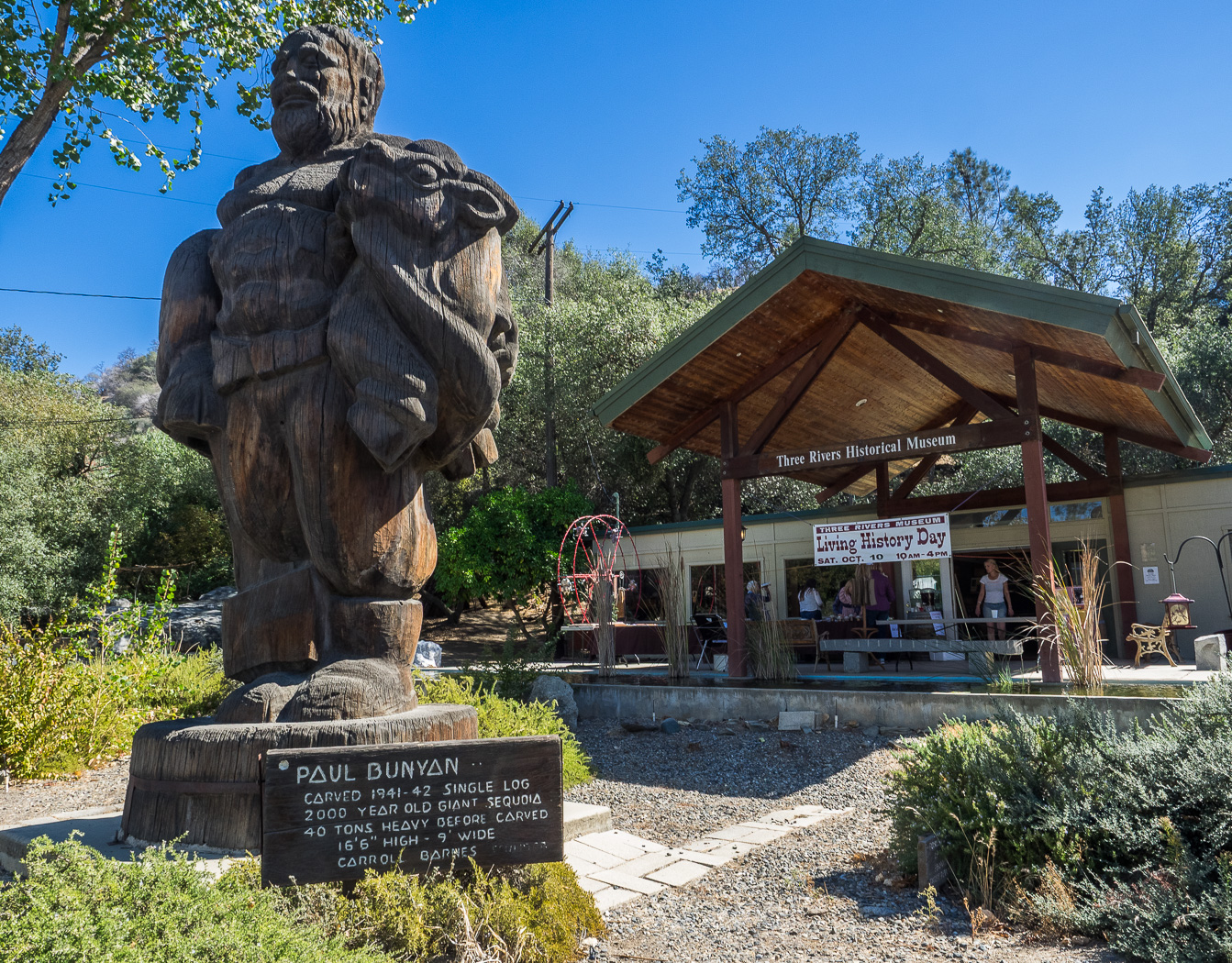
Click on photo for more information.
Visiting Three Rivers Historical Museum and Visitor’s Center
by Laurie Schwaller
Three Rivers Historical Museum and Visitor’s Center opened in October, 2000, and has been growing ever since, fulfilling its educational and research mission “to preserve the past for future generations” by collecting, preserving, and exhibiting materials relating to our region, and by providing lectures, demonstrations, special events, and participatory programs inviting scholars, residents and visitors to understand and experience our history. Inside are terrific displays, the unique Mineral King Room, and a thoughtful gift shop. Outside: historic structures, vintage vehicles, the 1600′ Heritage Trail, recreated Native American habitations, and Paul Bunyan. Stop, stretch, enjoy!
The Three Rivers Historical Society, formed in 1991, established and administers the museum, and, along with a number of volunteers, staffs it as well. While focused on preserving, researching, and displaying the past, Society members always have their eye on the future and on how the museum can best serve its community, its many visitors, and history buffs at large.
The museum’s purview extends beyond the town of Three Rivers to the surrounding foothills and their canyons carved by the forks of the Kaweah River, to Lake Kaweah to the west, and to Sequoia National Park and its famous Mineral King Valley to the east, as the town’s history (and its present and its future) are all bound tightly to what has happened and will happen in the larger area.
The stories of this larger area are brought to life at the museum. Inside, you’ll find extensive textual and photographic archives, varied displays of historic clothing, tools of many trades, furniture and furnishings, books, toys, musical instruments, newspapers, demtal equipment, and the colorful, inviting Mineral King Room, constructed and furnished in partnership with the Mineral King Preservation Society.
This room not only tells the stories of that remarkable place (once a mining boom town, could have become a major ski resort, still the highest settlement in Tulare County and the highest spot you can reach by vehicle in Sequoia National Park), but also includes a unique hands-on introduction to the remarkable people who have been indigenous to this region for thousands of years; they’re certainly still here, and we have much to learn from them.
The stories continue outside, where Paul Bunyan and his blue ox, Babe tower before you. Carved out of a 22-ton sequoia log by local artist Carroll Barnes in 1941, this huge statue reminds us of the many decades of massive industrial logging that occurred in our forests and that eventually caused the creation of the U.S. Forest Reserves, our National Forests system, and, very directly, Sequoia National Park.
Just a few steps away, you can visit Native American habitations constructed by Johnny and Gary Sartuche, local Wukchumni Yokuts people. Many groups of regional fourth-grade students have gathered here in the fall to learn about the indigenous Wuksachi and Wukchumni Yokuts’ history and lifeways.
The museum’s 1600′ Heritage Trail, built by the crews of the Mountain Home Fire Camp and the Three Rivers CALFire station, begins here. An easy 15-20 minute walk, it leads you under the oaks and near the old Bahwell Ditch to interesting historical sites from 1850 to the present, described in the brochures available at the start.
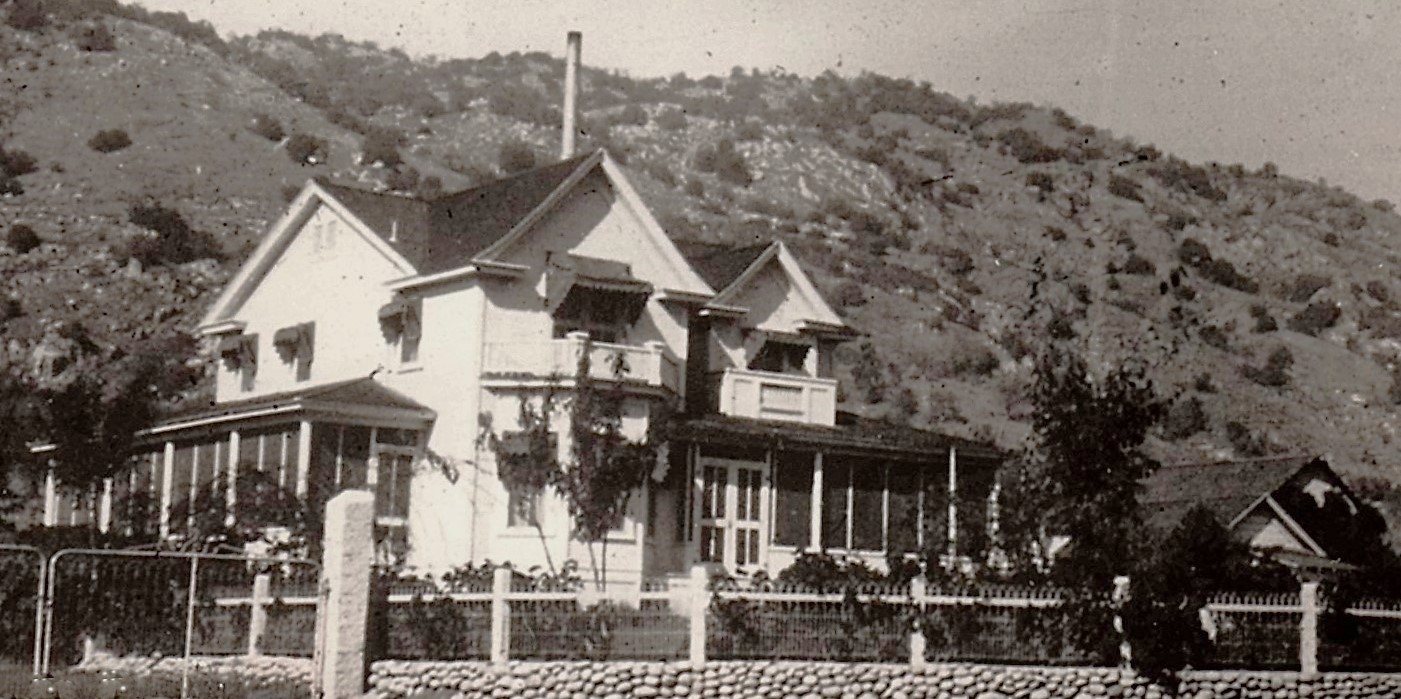
The trail ends at the Bequette House, built here, on property purchased from the Bahwell family, by Bruce and Jessie Bequette in 1926. The Society and many volunteers restored it in 2017, and furnished it with a number of the family’s antiques provided by Bequette descendants. (Jessie’s grandfather was Walter Fry, who moved to Three Rivers in 1895 and served as superintendent of Sequoia National Park in 1912-1920.) Jessie and Bruce also built a structure nearby that became Bequette’s Gift Shop (1953-1967), then Mountain Arts gift shop and weaving store (1975-1995), and then another gallery for a while before it was purchased to become the Three Rivers Historical Museum.
Near the restored Bequette House stands a replica of the tiny (8′ x 16′) Bahwell Saloon, built just 35 feet from its original 1895 location. Believed to have been the first public saloon in Three Rivers, the little bar lasted until July, 1919 (National Prohibition went into official effect six months later). One hundred years later, the replica, based on a 1907 photo and some archaeological work, was constructed with cedar siding from the Mountain Home mill, and completed in 2020.
Next up, the Society has plans to build a blacksmith shop, perhaps a close copy of the Kaweah Colony’s smithy, including any changes required for it to function with a working forge, so that visitors (and prospective smiths) can be fascinated by watching a live blacksmith shaping and joining metal.
To top things off, the Society envisions a 2,400 square foot barn housing first-settler displays and antique wagons that will take visitors back to those days. The barn will also serve as a gathering place for museum events.
Meanwhile, the museum’s visitor center function was greatly enhanced by the construction of a much-needed, long-awaited first Three Rivers public restroom facility. Built by the County on the museum’s grounds, the restrooms opened to the public in 2021. The Society funds the maintenance of the facility, which is currently open 24 hours a day. While the restrooms are currently free to use, donations can be made onsite and are much appreciated.
Back inside the museum, visitors can get all kinds of information about the area from its knowledgeable volunteers, along with various printed materials. A myriad of fascinating historical items and their stories abound in the museum, and its gift shop is stocked with area-related gift, souvenir, and educational items, including loys, books, games, cards and postcards, and more.
Adjoining the shop is the remarkable Mineral King Room, with its stunning mural of the breathtaking valley surrounded by high mountains which was “discovered” by hunter “Harry Parole” in 1863 (the indigenous Yokuts people had been coming to it in the snow-free seasons for centuries). Follow Mineral King’s tumultuous, hard-fought history here, and then learn more about the Yokuts people through the creative interactive display installed along the north wall of this mind-expanding room.
Every time you’re headed into Kaweah country, a stop at the Three Rivers Historical Museum can enrich your journey by increasing your awareness and understanding of the endless treasures awaiting you in this marvelous sector of our big county. (Note that the Sequoia Shuttle stops here, too, on its route between Visalia and Sequoia National Park.) And if you love history and meeting people from all over the world who are on their way to discover these treasures themselves, remember that the Three Rivers Historical Society is always looking for great volunteers!
June, 2026
NOTE: The Project Team will be conducting research for a full article page as volunteer time allows. Contact Us if you’d like to help research, write about, and/or illustrate this Treasure!
From Visalia, go east on Hwy 198 into Three Rivers. The museum will be past the school, on your right, at 42268 Sierra Drive/Hwy 198, with the giant Paul Bunyan statue out front. (If you get to Reimer’s Candies, you’ve passed the museum.)
Note: The Sequoia Shuttle (fee; reservations required online a day in advance) stops at the museum on its route between Visalia and Sequoia National Park! The shuttle usually runs from the week before Memorial Day through Labor Day week, departing its first pick-up point in Visalia at 6:00 and 8:00 a.m. daily and departing Sequoia National Park from the Giant Forest Museum at 4:00 and 5:00 for its return trip to Visalia.
The shuttle picks up passengers at the Three Rivers Historical Museum shuttle parking area at 7:30 and 9:30 a.m and arrives at the Giant Forest Museum in Sequoia N.P. at 8:48 and 10:48. Passengers returning to Three Rivers must have reservations on the 4:00 or 5:00 p.m. shuttle leaving from the Giant Forest Museum. Up in the park, free shuttle buses run from 8:00-6:00 daily. Enjoy a car-free day among the giant sequoias! See the Sequoia Shuttle website for details (or phone 877-287-4453 with questions).